Understand what each method is doing
Soft washing generally combines a compatible cleaning solution, controlled dwell time, and a lower-impact rinse. On suitable surfaces, chemistry can loosen organic growth, pollen, mildew-like staining, bird residue, and atmospheric film without relying on high water impact. It still requires accurate dilution, surface testing, plant and property protection, public separation, and water management. Low pressure is not automatically safe if chemistry, dwell, rinsing, or runoff is poorly controlled.
Pressure washing depends more on water impact and can suit durable, compatible concrete, selected paved areas, loading surfaces, and other zones after review. Pressure at the surface depends on nozzle, distance, flow, angle, and technique, not just an advertised machine number. Excessive impact can etch concrete, remove mortar, lift paint, damage EIFS, disturb sealants, or drive water behind openings. A good Jonesboro proposal explains where each method has a role and where neither addresses a leak or failed coating.
Match the method to materials and deposits
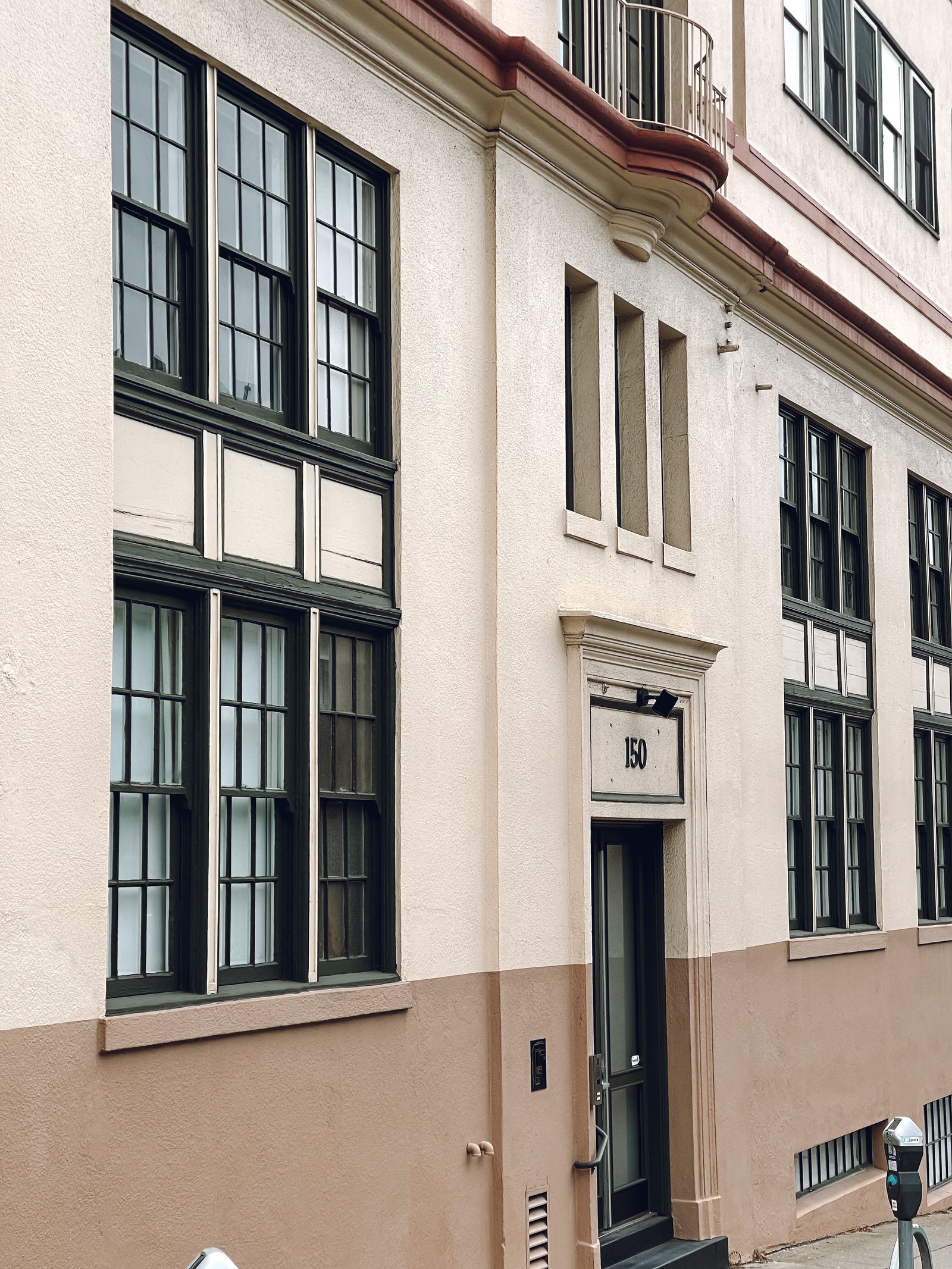
Brick and mortar require attention to porosity, joint condition, age, previous repairs, and water absorption. Concrete may tolerate a direct rinse in one service area but need a gentler approach where it is cracked, polished, coated, spalled, or weathered. Metal panels may show oxidation, chalking, traffic film, or coating failure rather than organic growth. Glass, stucco, EIFS, stone, painted block, awnings, sealants, and composite panels each deserve a compatibility review. A single facade can contain several of these around a storefront or canopy.
The appearance of the deposit offers clues but does not prove its cause. Green or dark film on a shaded damp wall may be a candidate for soft washing. White crust, rust-colored bleed, black carbon, efflorescence, and streaking below a parapet may indicate minerals, oxidation, soot, salts, or water movement. Northeast Arkansas humidity and heavy rain can make a drainage problem look like a cleaning problem. A test area and condition notes are more useful than promising that one process will remove every mark.
- Review masonry joints, concrete condition, glazing, panels, coatings, sealants, and repairs.
- Identify whether the deposit is organic, mineral, oxidized, salty, soot-based, or drainage-related.
- Test a representative area when the finish history or stain cause is uncertain.
- Separate washing from restoration, coating removal, glass work, and building-envelope repair.
Apply the comparison to Jonesboro corridors
Downtown Jonesboro may require sidewalk separation, short staging, curb and storefront access, and work outside busy pedestrian or event periods. Caraway Road retail may need tenant communication, customer parking protection, drive-lane sequencing, and a before-opening handback. An Arkansas State-adjacent property may need to account for student movement, visitors, events, and campus-area traffic, without assuming any university relationship or contract. The method must work around the people who actually use the property.
Medical and office properties may prioritize patient drop-off, accessible routes, quiet work, air-intake protection, tenant notices, and employee entrances. Industrial and agricultural corridors may add dust, soil, exhaust, oxidation, loading activity, trailers, forklifts, production, or outdoor equipment. A soft wash may address one part of that condition while controlled pressure, degreasing, specialty treatment, hand work, or another trade handles the rest. The quote should assign a method by zone rather than label the entire property.
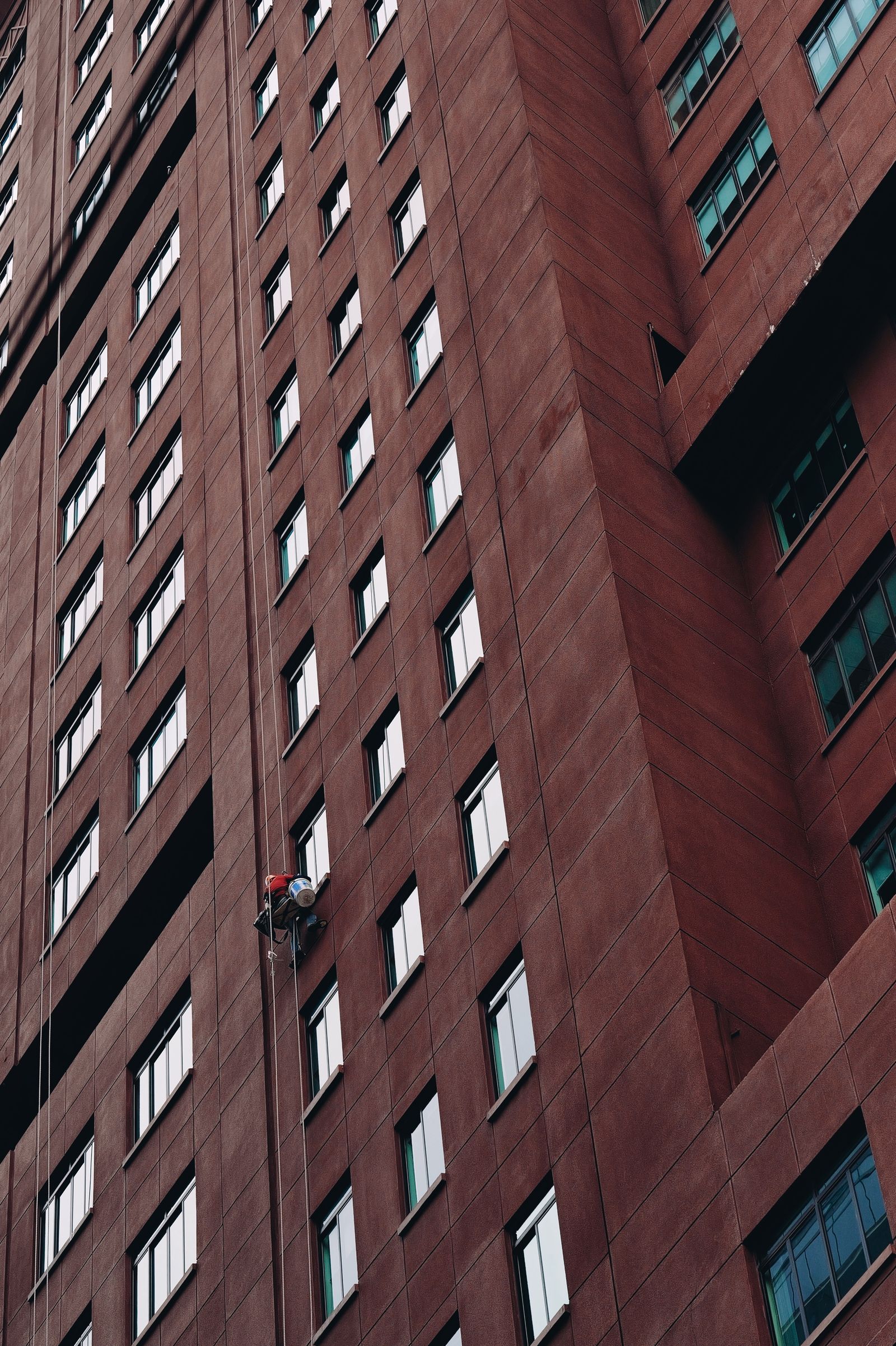
A hybrid plan is often more realistic: soft wash a compatible upper masonry wall, use a water-fed pole for selected glazing, apply controlled pressure to a durable service apron, and hand-detail signs, louvers, doors, and canopies. Aerial assistance may be considered for suitable upper elevations when wind, airspace, launch space, stand-off distance, and ground controls support it. It does not replace close assessment, contact glass cleaning, or repairs.
Let humidity, pollen, storms, and drainage affect the decision
Jonesboro's warm, humid conditions, spring pollen, summer heat, shaded walls, rain, and thunderstorms affect both the deposit and the work window. A pollen-covered retail facade, a shaded downtown wall, and a rain-exposed warehouse entrance may behave differently on the same day. A sunny metal panel can change dwell time quickly, while a shaded brick wall may remain wet. Wind can spread mist or make aerial work unsuitable. Lightning, heavy rain, extreme heat, or slick pavement can require a pause regardless of the chosen method.
Runoff belongs in the method decision. A storm drain at the edge of a parking lot is not automatic authorization for treated water to enter it. Controls depend on product, soil, rinse volume, slope, landscaping, drain type, and site requirements. Possible controls include diversion, recovery, reduced water, filtration, plant protection, disposal, or coordination with the responsible authority. A proposal should explain assumptions and response steps if water moves toward a different inlet, tenant area, sidewalk, or landscaped zone.
Recurring streaks may point to a blocked gutter, downspout, planter, irrigation head, parapet detail, condensation point, failed joint, or roof-edge defect. Cleaning can document the visible condition, but the property owner may need a roofer, mason, painter, irrigation professional, or building-envelope specialist. Choosing pressure to chase a drainage mark can make the surface worse without correcting the source.
Compare risk and practicality at an occupied site
Before selecting a method, identify entrances, accessible routes, parking, loading, air intakes, doors, cameras, electrical equipment, landscaping, vehicles, public separation, and emergency lanes. A lower-impact rinse can still create slip risk, overspray, chemical exposure, or uncontrolled runoff. A pressure stream can create more splash, noise, impact, and water movement. Neither method should be chosen without a plan for the people, equipment, and drainage around the wall.
Aerial assistance may reduce some staging on a broad upper elevation, but it needs a suitable launch and recovery area, visual control, public separation, stand-off distance, workable wind, airspace compliance, and a ground team. FAA requirements still apply. If the site cannot support those controls, a pole, lift, hand, ground, or hybrid method may be safer and more practical. The quote should identify access by elevation and provide a backup when weather or site activity changes.
Ask for clear expectations: what should improve, what may remain, which deposits are outside routine cleaning, how a test area will be reviewed, and what happens if the facade reveals damage. A method comparison becomes useful when it helps the facilities team approve a scope, schedule around occupants, and hand the property back without confusion.
Use the quote to make the method choice
Send the Jonesboro address, building use, photos of the entrance and representative elevations, approximate height, materials, visible deposits, preferred timing, water access, nearby drains, and operating restrictions. Include customer, patient, student, tenant, employee, visitor, event, delivery, production, agricultural, or equipment constraints. Ask the quote to show method by zone, test areas, access equipment, protection, runoff assumptions, weather triggers, included elevations, expected appearance, and exclusions.
To compare options, call +1 239-351-2897, email contact@dronebuildingcleaners.com, or use the existing quote/contact CTA. Drone Building Cleaners can help you get in touch and discuss soft washing, controlled pressure, contact detail, aerial assistance, a lift, or a hybrid plan. The best recommendation is specific about why a method fits a material and soil, how the occupied site will be protected, and which conditions belong to another professional.